Understanding Why Some Jews Reject Zionism
Most people outside Jewish communities don’t realize that Judaism and Zionism are not the same thing, and never were. Judaism is a 3,000-year-old religion and culture. Zionism is a 19th-century political movement created largely by secular Europeans.
For many Jews, the two comfortably coexist. But for others—especially religious Jews who see their faith as ethical, spiritual, and global—the rise of Zionism has created a painful dilemma:
They feel their ancient religion has been overshadowed, rebranded, or even hijacked by a political ideology they do not share.
This feeling is not rare. It is something you hear from:
-
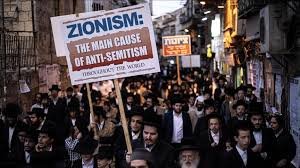
Ultra-Orthodox and Hasidic Jews
-
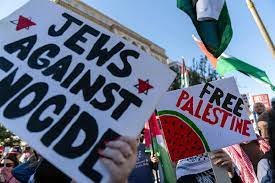
Secular anti-nationalist Jews
-
Israeli Jews frustrated with political extremism
-
Diaspora Jews who fear being blamed for the actions of a government they do not support
This blog explains why these Jews make that distinction, how Zionism came to speak in Judaism’s name, and why understanding this difference helps protect both Jewish identity and public dialogue.
1. The Original Problem: Zionism Was Political, Not Religious
When Zionism emerged in the late 1800s under Theodor Herzl, most Jewish communities were not onboard. Many early Zionists:
-
Did not practice Judaism
-
Saw Jewish religion as outdated
-
Wanted to create a new nationalist identity
-
Sought political rather than spiritual solutions
This caused conflict immediately.
To religious Jews, who prayed daily for a spiritual redemption, the idea of a man-made, secular Jewish state felt like a rewriting of God’s plan.
This tension still exists today.
2. Why Some Jews Feel Their Faith Has Been “Piggybacked”
Many Jews you’ve spoken with are expressing a real issue:
Zionism often presents itself to the world as if it represents Judaism itself.
This happens in several ways:
A. Using Jewish suffering as political justification
Zionism often invokes Jewish history—especially the Holocaust—to justify modern political actions.
Some religious Jews feel this uses their traumatic history as a shield for government behavior, and they find that morally troubling.
B. Claiming that Israel = all Jews
Statements like:
-
“Israel speaks for the Jewish people”
-
“Attacking Israel is attacking Jews”
-
“All Jews support Israel”
…erase Jewish diversity and imply political loyalty is a religious obligation.
C. Equating Zionism with Jewish identity
Many Jews are told:
“If you’re Jewish, you must be Zionist.”
This is deeply painful to Jews whose Judaism emphasizes universal ethics, humility, or nonviolence—and who believe nationalism can conflict with those values.
D. Positioning anti-Zionist Jews as “bad Jews”
Some Zionist institutions label anti-Zionist Jews as:
-
Self-hating
-
Betrayers
-
Ignorant
-
Disloyal
This creates identity trauma. They feel pressured to accept an ideology that contradicts their faith.
E. Political actions done “in Judaism’s name”
Some religious Jews are horrified when:
-
Settler violence
-
Displacement
-
Extremist rhetoric
-
Human-rights violations
…are framed as fulfilling “God’s will.”
They do not recognize this as Judaism at all.
3. The Identity Struggle: Judaism Is a Moral Framework, Not a Nationalist Project
For many observant Jews, Judaism is:
-
a covenant with God,
-
a set of ethical obligations,
-
a spiritual discipline,
-
a global community,
-
a mission of justice and compassion.
So when Zionism promotes:
-
ethnonationalism,
-
political power,
-
territorial claims,
-
military identity,
-
and geopolitical goals…
…it feels like a completely different belief system wearing their religious clothing.
To them, Zionism didn’t “grow out of Judaism.”
It simply borrowed Judaism’s symbols, language, and history, and applied them to a modern political state.
Some call this “piggybacking.”
Others call it “identity takeover.”
For many, it simply feels like confusion that harms everyone—Jews and non-Jews alike.
4. Why This Distinction Matters Today
A. Jews who disagree with Zionism deserve to be heard
They should not be labeled “traitors” for holding a theological or ethical position grounded in their own faith.
B. Judaism should not be reduced to a geopolitical agenda
A religion thousands of years old cannot be collapsed into the policies of a single government.
C. Confusing Judaism with Zionism increases antisemitism
When people blame Judaism for political actions, Jews worldwide become targets.
D. Israelis deserve space to hold multiple identities
Not all Israelis support Zionism. Many religious Israelis reject nationalism in favor of Torah values. Others want peace over expansion.
E. Palestinians deserve accurate conversations too
When all criticism is dismissed as “anti-Jewish,” real issues get ignored and real suffering goes unaddressed.
5. A Way Forward: Let Judaism Be Judaism
A growing number of Jews worldwide are advocating this simple message:
Judaism is not Zionism. Judaism existed without a state for 3,000 years. Judaism will outlive any political ideology. Let our faith stand on its own.
They are not denying anyone’s right to safety.
They are not erasing Israel’s existence.
They are not rejecting Jewish peoplehood.
They simply want the freedom to practice Judaism without being politically categorized, and without having their religion’s name tied to actions they do not support.
That is not extremism.
That is spiritual integrity.
Conclusion: Understanding Helps Everyone
The point of this blog is not to tell readers what to believe.
It is to help them understand why many Jews—ordinary, devout, ethical people—feel their faith has been overshadowed by a political ideology they never chose.
When we understand this distinction, we can:
-
Respect Jewish diversity
-
Reduce harmful generalizations
-
Discuss Israel and Zionism more honestly
-
Protect Jews from unfair political blame
-
Protect Palestinians from having their voices dismissed
-
And restore clarity between faith and politics
Judaism deserves to be understood on its own terms—not through the lens of nationalism.
And the Jews who feel this confusion or pain deserve to have their voices heard.