Chapter – The Unraveling
The collapse didn’t come suddenly.
It crept in slowly—quietly—like rot beneath a wooden floor. Almost no one noticed the decay until they stepped in the wrong spot and felt the boards crumble under their feet.
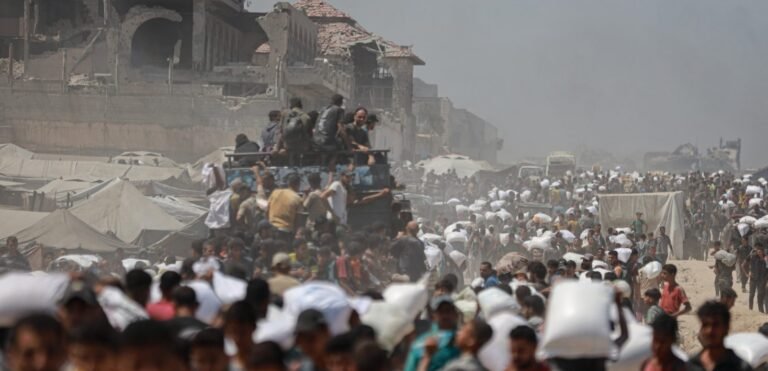
For Ames, the signs began with the small things. A grocery store he had visited for years suddenly had empty shelves where canned vegetables once sat. The clerk shrugged and blamed “shipping delays,” a phrase Ames now heard everywhere. Gas stations received fuel sporadically. Pharmacies restricted over-the-counter medications to one package per customer. The news insisted this was all temporary. “Minor disruptions,” they said. “Short-term shortages,” they said.
But to Ames, the shortages felt coordinated.
A slow strangling of the nation’s basic needs.
Citizens grew frustrated. Protests formed outside supermarkets and fuel depots. People demanded answers, but Rum’s administration responded with nothing but vague press conferences and finger-pointing at foreign nations. Ina was blamed. Ana was blamed. Rivals to the currency scheme were blamed. Even the citizens themselves were blamed for “panic buying.”
Ames wasn’t fooled. He watched from the sidelines, taking notes as he always did. He knew Sra and the Ions had no intention of keeping Erica stable. A destabilized population was easier to frighten. Easier to manipulate. Easier to herd into whatever future they were constructing.
And the future felt grim.
The Quiet Breakdown
Electricity began flickering on summer evenings. Rolling blackouts swept through entire regions—sometimes scheduled, usually not. Reports leaked of understaffed power plants, missing technicians, broken supply chains, worn-out infrastructure. But Ames suspected something more subtle, more deliberate.
The grid wasn’t failing—it was being allowed to fail.
Water processing facilities struggled next. City taps sputtered brown water for days at a time. Officials insisted it wasn’t harmful, but independent tests contradicted them. Ames stocked water barrels in his garage. His neighbors joked that he was preparing for a hurricane. He only smiled politely. He knew they wouldn’t understand.
Then came the inflation.
Not the dramatic kind economists talk about on television. This inflation was stealthy. Quiet. Hidden behind “service fees” and “temporary adjustments.” The cost of necessities doubled. Tripled. Meat became a luxury. Eggs were nearly inaccessible. Rent surged as corporate ownership—financed by government-friendly banks—bought up entire neighborhoods.
Ames saw fear spreading through the working class. Families couldn’t pay their bills. Elderly citizens lost their homes. Parents worked two or three jobs just to keep the lights on. And still, Rum appeared on television smiling, assuring the nation the economy was “the strongest in Erican history.”
Ames watched one such speech in silence.
The president’s smile didn’t reach his eyes.
His face looked rehearsed—trained.
Behind that mask, Ames sensed chaos. And powerlessness. And the invisible pressure of forces Rum could never mention.
Civil Unrest Grows
With shortages came anger.
With anger came unrest.
And with unrest came violence.
Cities that had been calm for decades erupted into clashes between frustrated citizens and officers ordered to enforce new security measures. Curfews returned. Large gatherings required permits that were nearly impossible to obtain. People waited in line for hours to buy basic food items. Rum’s critics accused the administration of allowing the country to decay intentionally so they could justify sweeping security powers.
But the truth was worse.
Sra and the Ions wanted Erica weak.
A weakened giant was easier to manipulate.
While citizens argued, Sra advanced their agenda quietly and without resistance.
Drew’s Warning
Drew Staman posted a new episode on his channel—one of his sparsest broadcasts, only twelve minutes long.
His tone was calm, but Ames felt the urgency beneath it:
“When a nation’s infrastructure collapses slowly, it is rarely accidental.
Watch the patterns. Watch what fails first. Watch who benefits.
Stability doesn’t erode naturally.
It is eroded.”
He didn’t name names. He never did.
But Ames recognized the message clearly:
Prepare. The big event is coming.
Dr. Moore agreed. He told Ames privately in his office, with all electronics turned off and the door locked:
“Societies don’t fall apart like this unless someone is loosening the bolts.
We are being softened.”
Ames nodded. He had known this for months.
But hearing it spoken aloud sent a cold chill down his spine.
The Calm Before the Blow
As the year wore on, something eerie happened.
People grew used to the chaos.
They accepted the empty shelves.
They accepted the outages.
They accepted the rising prices and long lines.
They accepted the constant fear of what might break next.
And that was the moment Ames realized:
This was intentional.
This was conditioning.
The nation was being prepared for a controlled collapse.
All the shortages, the instability, the slow degradation—
it was teaching the citizens to accept helplessness.
Ames marked the pattern in his notes:
“Destabilization → Exhaustion → Compliance.”
He didn’t know the exact shape of the coming crisis.
But he knew one thing without any doubt:
The real operation hadn’t even begun yet.