The Hidden Capitol
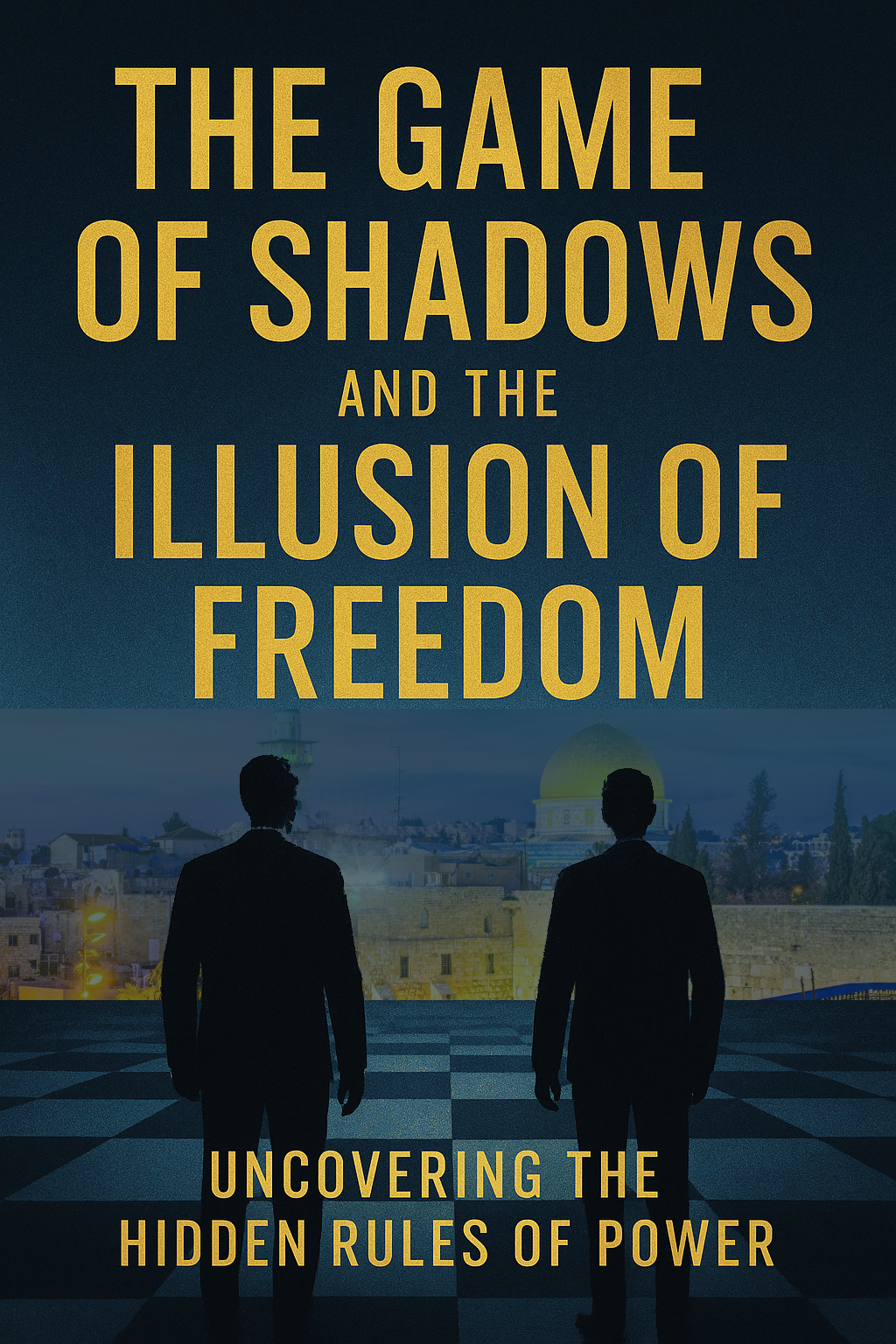
Ames had long suspected that the official capitol of Erica was little more than a carefully maintained illusion. The more research he conducted—and the more conversations he had with people who lived on the edges of political power—the more he found evidence that the real seat of authority was located far across the sea, in Sra. That city, Erusa, functioned as the true capitol, while the one the citizens of Erica recognized was simply a stage set for public consumption.
As Ames dug deeper, he began uncovering the outlines of an entire transcontinental network: operatives, advisors, financiers, and shadow administrators who moved effortlessly between Sra and Erica, ensuring that every policy, regulation, and political agenda followed the blueprint crafted in Erusa. He learned that nearly all major announcements in Erica—laws, executive orders, economic directives—originated first in Sra before being passed down through channels disguised as “alliances” and “diplomatic coordination.”
Even the president of Erica wasn’t free.
Ames discovered that the chief executive’s inner security team was staffed almost entirely by agents from Ossa—agents who, according to official statements, were there to provide elite protection. But according to Ames’s research, they were there for a very different purpose: not to protect the president from external threats, but to ensure he followed orders from Erusa, and to prevent him from ever revealing the true power structure of the world.
The Schil dynasty, once known for its reach across continents, had never truly relinquished its grip. Their descendants still operated behind the curtains, coordinated through Sra, and wielded influence that extended through Erica, the Royal Kingdom, and beyond. Ames had not yet found a direct, undeniable link between the modern Sra government and the Schil family, but too many clues suggested that one existed. He remained watchful, knowing that such a connection—if discovered—could reshape every truth Erica believed about its own history.
The current head of state, Ark Ubi, maintained a particularly close relationship with Yah, the Sra prime minister. Together they orchestrated a new set of projects that were being sold to the public as “innovations.” One of these projects involved Muskrat—a charismatic technocrat who claimed he was designing underground tunnels beneath major Erican cities to reduce traffic congestion. But Ames’s research suggested the real purpose was something else entirely: a private subterranean transportation network for the ruling class, a system that would allow them to move rapidly and invisibly when the people of Erica eventually rose in revolt.
And they would.
The ruling families anticipated it. That’s why, over the past decade, Ames noticed a disturbing trend: wealthy individuals with ties to Sra or the inner networks were buying large island estates and extravagant ocean-going vessels capable of sustaining life indefinitely. These weren’t luxury purchases—they were escape plans.
Determined to get as close as he could to the truth, Ames used his background in information technology to secure a short-term contract within a government project. Contractors often mingled with insiders in ways official employees could not, and Ames quickly built connections. One man in particular fascinated him: Ual Rowa, an older contractor with a habit of oversharing when he drank.
Ames played a subtle game. He acted knowledgeable but unsure—just enough to make Ual feel superior, just enough to encourage him to “correct” Ames with more revealing information. It worked.
One night, after several drinks, Ual opened up about his past assignments. Years earlier, he had worked on a project within the treasury—specifically, running fiber-optic lines through restricted areas. Although he had no direct access to the gold vaults, he told Ames a story that left a chill running down his spine.
Ual said that during one shift, he found a small shiny flake on the floor, gold in color. He pocketed it discreetly, hiding it under the metal ring of his boot lace so the scanner wouldn’t detect anything unusual. If the detector beeped, he could simply claim it was the boot hardware. Once outside, he took it to a goldsmith on his day off.
The goldsmith analyzed it and confirmed the unthinkable:
It wasn’t gold. It was lead, covered with a thin gold coating.
Ames responded as though confused, prompting Ual to clarify:
“Yes,” he said. “The gold in the treasury is fake. Now you know why they discontinued audits”
Ual claimed the real gold had been moved quietly, over years, to a location owned by the Schil family—an operation so thorough that almost no trace of the original reserves remained. Ames felt a wave of questions rising in him, but he held back. He understood that pressing too hard could shatter Ual’s fragile looseness and risk exposing his own intentions.
Instead, he let Ual talk.
But the partnership ended abruptly once the contract expired. Ames made no attempt to stay in touch; he knew the danger was far too great. If Ual ever realized Ames was studying the hidden systems of power—or if anyone connected the two of them together—Ames would be marked. So he let Ual disappear from his life.
The next time he encountered Ual’s name was while reading a memoir written by Lee Kefel, a member of the influential Kefel family. She mentioned Ual briefly, recounting their relationship and eventual marriage. Ames wasn’t surprised. In retrospect, it made perfect sense that Ual—someone already entangled in secret projects—would be drawn into a family with deep roots in the ruling hierarchy.
It was yet another confirmation that the world Ames thought he understood was nothing more than a façade—and he was now closer to the truth than he had ever imagined.